
Multi-day tour businesses make the perfect holiday look easy from the outside. However, the reality behind the scenes is very different. It takes a massive network of people, dates, plans, and payments. All these moving parts must work together perfectly. Communication tools smooth these processes out.
A single trip requires talking across different time zones. You have to coordinate with many suppliers, local guides on the ground, as well as those ‘excited’ travellers. Basic email alone cannot keep up with these demands. You need a single, connected communication system to grow your business. This is the only way to give travellers the great experience they expect.
How do you handle all the different messages in a multi-day tour business?
To manage tour communications, you need a single system that sends updates at the right time. This system must cover before, during, and after the trip. In addition, communication tools need to connect customers, suppliers, guides, and agents. Look at how much information moves through a single trip itinerary:
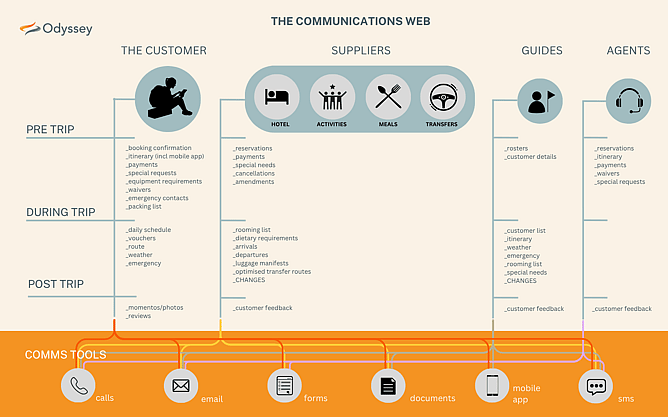
This diagram shows the huge web of details that a tour company must manage. Running just one trip requires constant communication. Your team must talk to people across the whole customer journey: Pre-Trip, During Trip, and Post-Trip.
At the same time, you have to balance four completely different groups: your customers, your main suppliers (like hotels, activities, restaurants, and drivers), your local tour guides, and your outside travel agents. Each group needs different pieces of important information at different times.
The process starts before the trip. Your team gathers customer information, payments, and special requests. This focus changes during the tour. Suddenly, you have to send fast-moving updates. These include weather alerts, new driver routes, changes to a lunch venue, and last-minute schedule changes.
Keeping this whole network connected requires many different communication tools. Operators rely on phone calls, emails, online forms, documents, mobile apps, and text messages. The real challenge is making sure all these tools work together. A single change should go straight to all the right people. Your team should never have to type the same email five different times.
Why should tour companies use technology and automation to send messages?
Tour companies should use technology and automation to stop human mistakes and prevent bottlenecks. Automation allows you to grow your business by sending fast, consistent, and personalised messages. Relying on manual copy-and-paste to update your partners and clients is risky. It makes it very easy to make mistakes. The best tour companies use modern software to standardise their emails. This ensures their outreach always looks professional. Tour operators can make their daily work much easier and faster by using smart, data-driven communication tools.
How do you automate messages across the whole traveller journey?
You can automate messages across the entire trip by setting up automatic schedules. These schedules send out pre-trip info, real-time updates during the tour, and feedback surveys at the end. Automated schedules keep things moving without any manual work. This seamless process runs from the moment someone books a trip until weeks after they return:
Pre-Trip: While the system sends booking confirmations to guests, it also dispatches them to suppliers. It can send out payment reminders and trip preparation resources.
During Trip: Your system should send real-time updates, schedule changes, and plans. These details go straight to the guides and teams on the ground.
Post-Trip: The system automatically sends out feedback surveys and review requests. This helps maintain a good relationship with your customers.
What features should a modern travel communication system have?
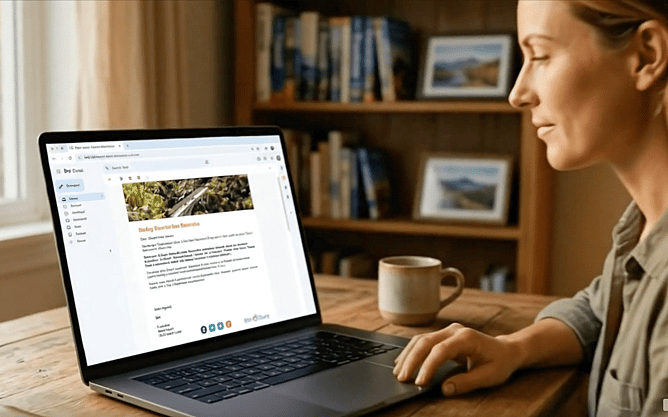
A modern travel communication system needs to auto-fill trip data and allow you to add your branding. It must also send important documents, track emails, and let customers reply normally. A good software platform should perform a few key functions to make basic emails feel premium:
Automatic Data Filling: The system uses smart templates. These templates automatically pull in specific trip details like exact dates, passenger names, hotel bookings, and payment details. Every message becomes personal without extra typing.
Brand Customisation: The software lets you add your company logos, banners, and beautiful pictures. Extra visual ads can help promote digital or mobile itineraries.
Easy Document Delivery: The platform automatically attaches important paperwork. This includes PDF itineraries, supplier vouchers, invoices, hotel rooming lists, and guest meal requests.
Online Forms: An online forms tool allows customers to complete passenger or waiver forms. Suppliers can confirm bookings and services through simple confirmation forms. Add clear action buttons within emails to guide customers and suppliers to these forms.
Resource Links: The system includes easy links to helpful tools for the traveller. You can link directly to packing lists, travel insurance sites, and destination guides.
Personal Notes: The tool gives you total flexibility. You can type a quick, unique note at the top or bottom of an automatic email for extra customer care.
Email Tracking: You can see exactly who received their documents. The software provides real-time tracking for sent, opened, and bounced emails.
Normal Conversations: The system protects your natural conversation flow. When a customer or supplier replies to an automated email, the message goes straight back to your regular team inbox. This allows you to chat normally.
How does Odyssey uniquely solve the multi-day tour communication challenge?
Odyssey solves this communication web by serving as the centralised engine for your business. The platform unites emails, interactive forms, real-time tracking, and secure payment processing into a single automated workflow. Your operations team no longer needs to switch between spreadsheets, email clients, and payment systems. Instead, the platform acts as a single source of truth for all your trip data.
An itinerary update often causes a stressful ripple effect. Odyssey handles this automatically and intelligently. The system modifies customer documents and updates supplier confirmations. Guides can be sent updated information as required. Odyssey's communication tools automate the heavy lifting. This ensures seamless operations and eliminates manual data entry. As a result, your team can focus on delivering exceptional travel experiences.
Where can I find communication templates made for Tour Operators?
You can download a free set of master communication templates directly from Odyssey. These blueprints are designed for multi-day tour businesses to optimise their emails and forms. Building a smooth journey starts with planning. You must decide what to say, who to say it to, and when to send it. Our helpful toolkit to help you audit your current workflows and transition to an automated system. This resource focuses on emails and forms for multi-day tour operators.
About the Author
Al Check is Co-Founder of Odyssey, the operating system for multi-day tour operators. He leads sales, marketing, business development, AI strategy, and channel partnerships, helping tourism businesses simplify operational complexity and build scalable, AI-ready systems.
With more than two decades of experience in adventure tourism, Al has worked across guiding, customer service, reservations, operations, and senior leadership. His hands-on experience includes helping establish a new depot operation for Cycle Journeys and contributing to the leadership of one of New Zealand’s largest self-guided cycling businesses.
Al regularly writes and speaks on tourism operations, business improvement and the role of AI in helping operators turn trusted data into practical business intelligence. He does this through industry communities, including the Adventure Travel Trade Association, Tourpreneur, and Cycle Summit.