
The adrenaline rush of clicking 'book now' is a powerful thing. But for adventure tour operators, that initial booking confirmation email isn't the finish line, it's the starting gun.
For a multi-day holiday, a guest needs to provide a mountain of data: passport numbers, dietary requirements, medical histories, and flight arrival times. If you blast them with a massive, 50-question form the second their booking confirmation hits their inbox, you kill the excitement. They get form fatigue, you get half-filled spreadsheets, and the seamless holiday vibe is ruined before it even begins.
As a tour management platform, we see a huge amount of variation in how and when our customers communicate with their guests. This variation is actually the 'secret sauce' that makes your tour so special; it is your unique experience overlaid with your company's distinct culture and personality.
Because of this, we don't believe in rigid, one-size-fits-all templates. But we have identified a common framework that follows the customer journey. Think about how your communication flow fits into this solid operational structure.
What are the Essential Customer Communications for an Adventure Tour?
Phase 1: Immediately at Booking – The booking confirmation email, secure deposit collection, and legal essentials.
Phase 2: Mid-Way Prep (60–90 Days) – Gathering details to customise the trip (meals, gear, rooming). Requesting payment in full.
Phase 3: The Final Countdown (30 Days) – Finalising arrival logistics and travel insurance. Introducing the mobile app.
Phase 4: During the Trip – Day to day Itinerary, vouchers, navigation, and weather on a mobile app like Ody Trips. SMS text to customer or guides.
Phase 5: Post-Trip – Reviews, feedback, photo albums and future trip planning.
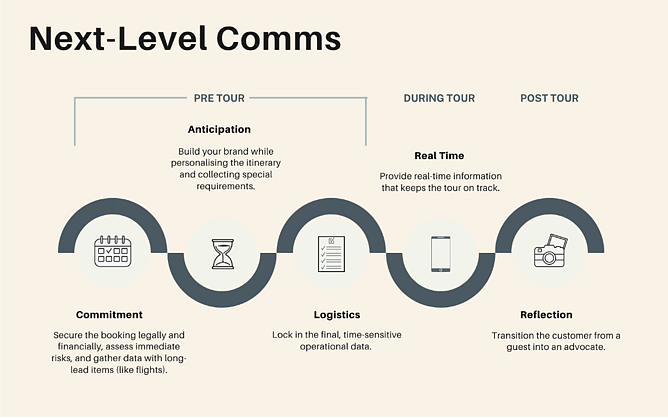
In even simpler terms, we think of these phases as shown in the diagram below. They are Commitment, Anticipation, Logistics, Real Time and Reflection.
How do Tour Operators Manage the Booking Confirmation and Secure Deposits Instantly?
The moment a traveller decides to join your adventure, your communication plan springs into action. The Commitment Phase is all about capitalising on that peak excitement by combining your automated booking confirmation with instant deposit collection.
If a guest has responded to a Tour Proposal, then high-level screening for trip suitability should have already taken place, otherwise now is the time to do it. The Proposal then becomes the basis for the itinerary for the trip on booking confirmation.
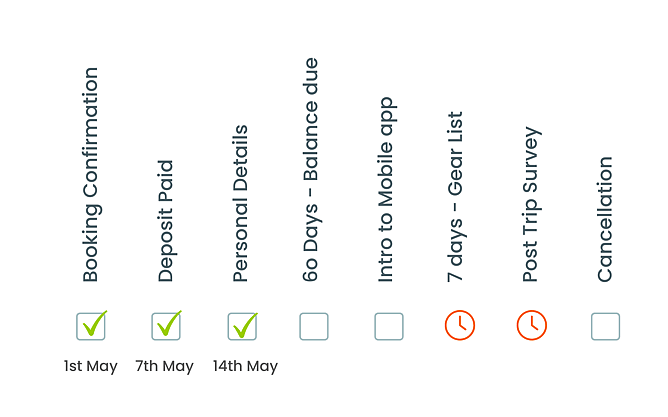
An immediate booking confirmation email is essential for client confidence. They can see the exact tour, dates and number of people they have booked for. Using smart automation of guest emails right from the outset ensures timely, relevant and reliable information flows at all stages of the customer journey.
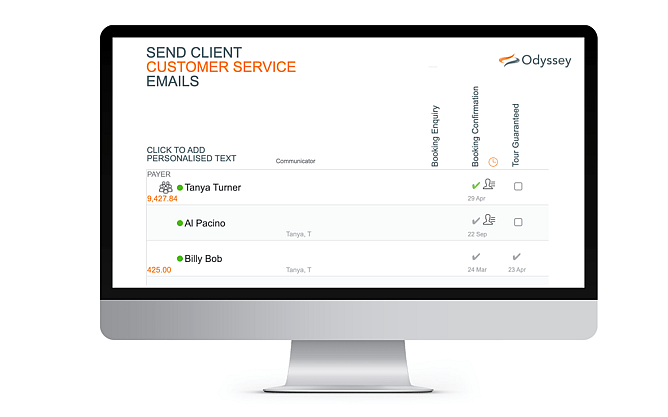
Using the Odyssey Payment Status Dashboard, your team gets instant clarity without cross-referencing bank accounts. You can track whether the deposit is still due or has been paid. Odyssey also indicates who the payer is in the case of a group of travellers, so the correct person gets the finance-related communications.
In this phase, you also want to issue your digital Waiver Form directly through Odyssey's secure form builder. If you are still waiting to receive it you can track exactly whether emails have been opened and links clicked on.
What is the Best way for Tour Operators to Collect Dietary and Rooming Preferences?
Depending on how close to the tour a booking is made, there is a window of time that is a great opportunity for your customer to personalise their trip. Making this a brand experience is often overlooked. We call this the Anticipation Phase.
Advertising optional activities, hotel upgrades and meal preferences both inspire and upsell a customer. While describing accommodation options, include a form to collect room preferences. Promote the local restaurants serving authentic food, and collect dietary requirements.
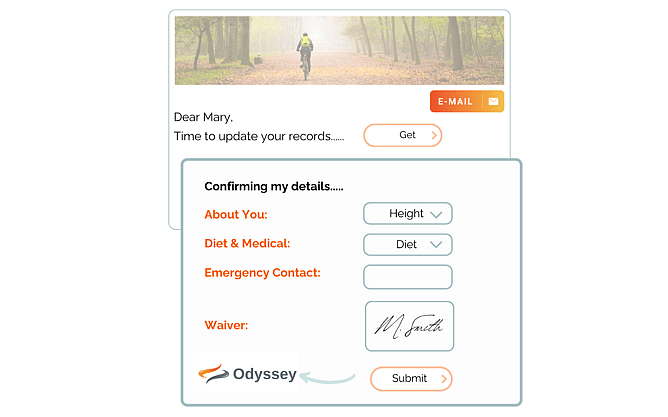
This is the perfect window to use interactive Online Forms to gather operational details that help you personalise their adventure. Avoiding manual data entry by collecting guest details in forms that sync straight to a tour management system is one of the most reliable ways to eliminate errors from manual copy and paste.
Adding personalisation into a guest’s tour is where the Odyssey Itinerary Customisation shines. Starting from Master templates, you can easily customise the itinerary to match guest preferences and send them updates at the click of a button.
This is also a good time to check that the Equipment Rental Agreement has been returned. If a guest hasn't filled it out, a quick look at your tracking dashboard will tell you if they saw the email but ignored it, or if it got buried in their inbox, letting you send a friendly, targeted reminder.
How do you Minimise the Impact of Last-minute Changes on Tour Operations?
By this stage, your guests have booked their travel and sorted their personal arrangements. Now your team is in the Logistics Phase. This is where a central customer database is worth gold. Your team can use a real-time tracking dashboard to lock in the final logistical pieces without sifting through endless email threads.
At this time, you want to confirm flight arrival and departure times and collect travel insurance details. It is another chance to go the extra mile by providing packing lists, and other useful tips.
If you have Odyssey this is also the exact moment you prompt guests to download the Ody Trips mobile app. By getting them logged in a month before departure, they can familiarise themselves with the interface before they even pack their bags. Ody Trips also reduces the barrage of questions your support team will get right before the trip, as the customer can see their complete, confirmed tour in the app. This is perfect for self-guided, but also relieves the pressure on your guides for guided tours.
How do Guests Prefer to Receive Real-time Itinerary Updates while on Tour?
In the Real-time Phase, nothing beats a mobile app. Guests want instant, proactive information delivered straight to their pockets.
This is where Ody Trips, becomes the ultimate travel companion. Instead of carrying around a bulky folder of printouts and vouchers, guests can see their itinerary, route updates, and live weather forecasts right on their phone. Emergency Messages can instantly push urgent alerts using SMS text if a route is blocked or an itinerary changes suddenly, keeping your group safe and informed.
What is the Most Effective Post-Trip Communication Strategy for Travel Brands?
Once your guests return home, the task of the tour operator is not over. It’s time to capitalise on the Reflection Phase.
Gather TripAdvisor or Google reviews, and customer quotes while the magic is still fresh. If it was a guided trip, send photos of the group and other great moments. Find out where they want to explore next so you can send them relevant, targeted offers. All of this can be automated through post trip communications using a tour management platform like Odyssey.
Bringing It All Together
A truly great adventure communication strategy is a cycle. By replacing the old-school avalanche of paperwork with a phased, automated approach, you make life easier for your staff and create a premium experience for your travellers.
When you track the entire journey on a single dashboard monitoring payment statuses, email open rates, custom form completions, and the Ody Trips app, your team always has complete visibility. From the very first booking confirmation email right through to the final "welcome home" message, Odyssey keeps your operations moving seamlessly.
Free Booking Confirmation Email Template
Don’t forget you can download a free set of master communication templates directly from Odyssey including an email specifically for booking confirmation. These blueprints are designed for multi-day tour businesses to optimise their emails and forms across all 5 phases of the customer journey.
About the Author
Al Check is Co-Founder of Odyssey, the operating system for multi-day tour operators. He leads sales, marketing, business development, AI strategy, and channel partnerships, helping tourism businesses simplify operational complexity and build scalable, AI-ready systems.
With more than two decades of experience in adventure tourism, Al has worked across guiding, customer service, reservations, operations, and senior leadership. His hands-on experience includes helping establish a new depot operation for Cycle Journeys and contributing to the leadership of one of New Zealand’s largest self-guided cycling businesses.
Al regularly writes and speaks on tourism operations, business improvement and the role of AI in helping operators turn trusted data into practical business intelligence. He does this through industry communities, including the Adventure Travel Trade Association, Tourpreneur, and Cycle Summit.