
“Build a more resilient business” this is something that Tour Operators aspire to according to the latest Adventure Travel Trade Association Trends and Insights Report 2026.
Not rapid growth, but instead to run a better and more stable business. This is a good business strategy.
While the Adventure Travel industry continues to steadily grow Operators are dealing with rising costs, external uncertainty and changing demand. So the focus naturally shifts to 'how can I run my business better'.
Resilience isn’t just about growth
Sometimes we think being more resilient is about expanding such as having different products, and new markets will bring more customers. This is actually diversification, and while it can help, it doesn't necessarily make your business more stable. It can add more complexity, which make decisions difficult, and then the day-to-day operations become harder to manage. See the previous diversification blog here
What does resilience look like in practice?
Resilient operators tend to run their day-to-day business in a certain way. Through leadership and team culture they give energy and priority to risk management, e.g. where are they likely to be exposed if demand shifts, or something else changes, like in the supply chain.
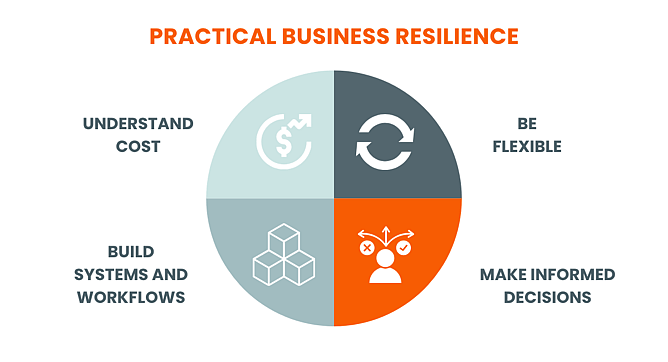
They have a flexible mindset towards their operations. For example they will have alternative suppliers as back up, or they can adjust their trips or pricing as required. They will keep a close eye on finances and performance, and understand their trip costs and margins. And while this might sound obvious they communicate clearly and effectively with their customers, suppliers, staff, and guides.

Where resilience actually gets tested
It's the day-to-day operations that are most vulnerable, because resilience doesn’t usually break at the strategy level.
It breaks in the day-to-day running of the business.
Not knowing costs per trip per customer
Limited visibility on margins
Difficulty tracking performance across products
Decisions being made on instinct rather than data
A lot of this comes down to how the business is set up behind the scenes.
And it's going to be hard if your using spreadsheets or legacy systems that don't connect your data and workflows.

Steady growth changes the equation
The ATTA data shows most operators are seeing modest growth, with some reporting flat or even declining performance. If this is your business, then you'll know there's less room for inefficiency.
Margins matter more. And you need to be conscious of your costs. But also have visibility for any issues that arise. This is where having a clear view of how the business is performing becomes really important.
What resilience actually looks like
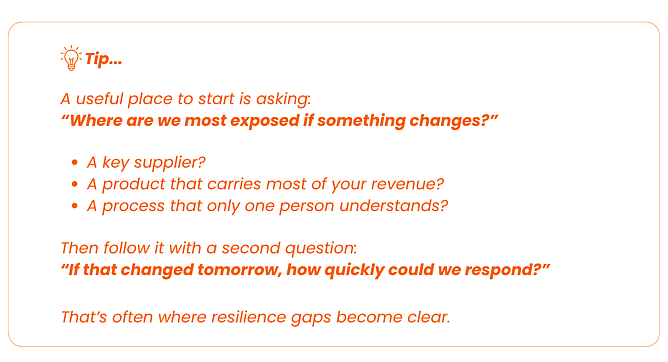
As we've mentioned, it's not necessarily about adding more. It's about having better oversight and control of what you already have.
Clear visibility across bookings, costs and margins
Confidence in the data behind decisions
The ability to adjust quickly when things change
Less reliance on manual processes and workarounds
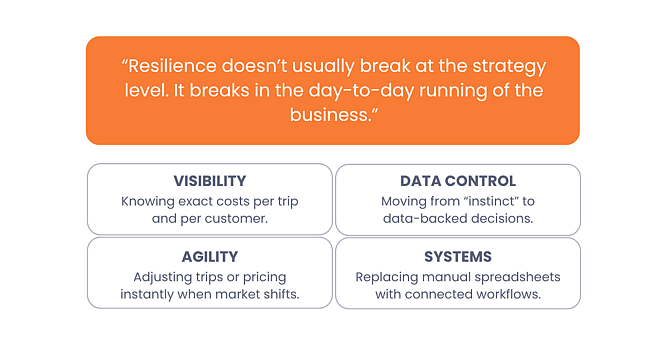
Resilience should be built into the foundation of your business and that normally comes from systems, processes, and workflows.
How bookings are managed.
How costs are tracked.
How information flows across the business.
The fact is that with any business, if you improve these aspects your business will run much smoother.
This is where Odyssey fits, bringing data structure for access to trip costings, advanced reporting, dashboard visibility, and seamless workflows and connected data, so Operators can run a more controlled and resilient business.
About the Author
Al Check is Co-Founder of Odyssey, the operating system for multi-day tour operators. He leads sales, marketing, business development, AI strategy, and channel partnerships, helping tourism businesses simplify operational complexity and build scalable, AI-ready systems.
With more than a decade of experience in adventure tourism, Al has worked across guiding, customer service, reservations, operations, and senior leadership. His hands-on experience includes helping establish a new depot operation for Cycle Journeys and contributing to the leadership of one of New Zealand’s largest self-guided cycling businesses.
Al regularly writes and speaks on tourism operations, business improvement and the role of AI in helping operators turn trusted data into practical business intelligence. He does this through industry communities, including the Adventure Travel Trade Association, Tourpreneur, and Cycle Summit.