
A guest calls three days before departure. They booked a medium step-through bike six weeks ago. Your team checks, but that bike went out on another trip and isn't back until the day before. The maintenance window sits between the return and this departure. You can make it work, but only because someone caught it in time.
Now imagine that check didn't happen. Or that it happened after the guest had already been told everything was confirmed.
For cycling tour operators, inventory is not a back-office detail, it's essential to the product. When a guest books a bike, they expect that specific bike, in the right size, in the right condition, to be waiting for them. Managing that promise across a season of departures, a fleet of different models and sizes, and a range of pre- and post-trip requirements is one of the most operationally complex things a cycling business does. And most operators are still doing it manually on spreadsheets.

Why do so many cycling operators manage bookings and equipment separately?
Because the tools were built separately.
Most booking platforms are designed to take a reservation and process a payment. They're good at that. But they weren't built to track a specific bike through its hire cycle, flag a sizing conflict before it becomes a guest problem, or show you at a glance which bikes are allocated, which are available, and which are sitting in the workshop.
So operators end up with a booking system over here and a spreadsheet for bike inventory over there. Every time a booking comes in, someone manually checks the spreadsheet, updates the allocation, and hopes nothing changes between now and departure. When something does change, the update has to flow through both systems by hand every time.
At low volume, this is manageable. At 100+ departures a season with 50+ bikes across four sizes and three models, it becomes a genuine operational risk.
What does a sizing conflict actually cost?
It depends on when you catch it.
At the time of the booking it’s a five-minute fix. Two weeks out it becomes a logistics problem. And if it’s on the day, the guest experience failure might end up in your reviews.
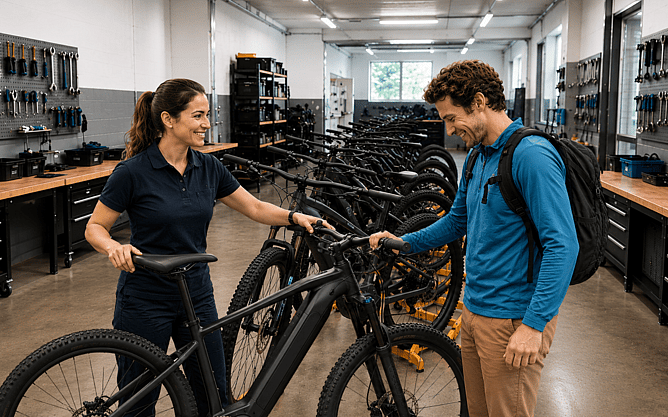
Bike sizing is one of the most personal parts of a cycling trip. A guest who rides a medium at home expects a medium on tour. Getting that right requires knowing exactly the customer details, normally their height, and to be able to matrix that against your fleet. You also need to know which bikes you have, which sizes are allocated to which departures, and where each bike is in its availability and maintenance cycle at any given point.
In a spreadsheet-driven operation, that information exists across multiple documents, updated manually, with no guarantee that the version someone checked yesterday reflects what happened this morning. A bike that got hired as a day ride. A guest who upgraded their size request. A return date that shifted because of a trip extension. Each of those changes has to find its way into every relevant document before it matters. In practice, they don't always.
Curious what your current booking technology is costing you across the full season? Use the Ody Shop Booking Cost Calculator to run your own numbers. https://www.myodyssey.app/calculator/
Why do cycling operators sell more than most people realise?
Ask a cycling operator what they sell and they'll say tours. But look at the operational picture and it's considerably more complex than that.
Bikes are the obvious one. But most cycling operators also sell or manage shuttles, transfers, luggage services, accessories, bike upgrades, e-bike options, support vehicle capacity, and in many cases accommodation or add-on experiences. Each of those has its own inventory, its own availability, and its own allocation challenge.
A shuttle that can carry 12 bikes has a hard capacity limit. An e-bike fleet of 8 is a specific subset of available inventory. A luggage van running a different route to the riding group needs its own manifest, its own timing, and its own capacity management. When all of this sits in separate spreadsheets with no connection to the bookings, your team is holding the operational picture together in their heads, which is a big risk.
The complexity multiplies when you consider that guests book different combinations of these products. Some bring their own bikes and only need the luggage service. Some want the full package including transfers at both ends. Some upgrade to e-bikes on day three. Each variation changes the inventory picture for that departure, and someone has to track it.
What does connected inventory actually look like for a cycling operator?
The starting point is the booking record knowing what equipment has been allocated to it.
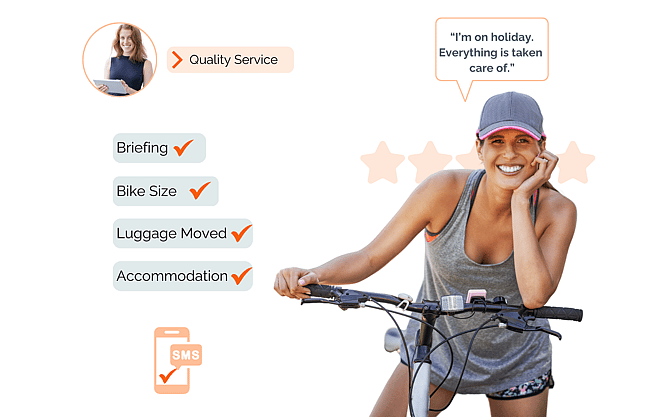
When a guest books a medium road bike with an e-bike upgrade on day two, that information sits in the booking. That should be driven by two things, their height and the size of the bike. The inventory system sees it and the bike is allocated based on the model to height size matrix. Its availability is updated so if someone else tries to allocate the same bike to a different departure on an overlapping date, the system flags it before it becomes a problem.
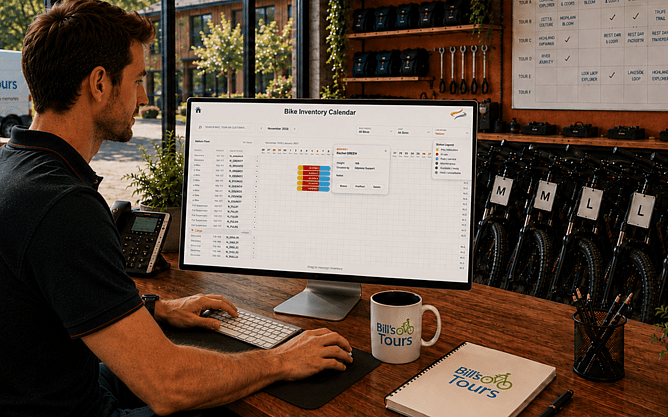
From there, the picture gets richer. Maintenance schedules sit alongside availability. A bike flagged for service after its next use doesn't appear as available for the departure that follows. Pre-trip requirements, post-trip requirements, cleaning schedules, safety checks: all of it feeds into when a bike is genuinely ready to go out again, not just when it's physically back at the depot.
What's the real return on getting this right?
Fewer problems on the day is the obvious one. But the compounding return is in what your team can do with the time they're not spending on manual allocation checks, and having the piece of mind that everything is well organised.
A team that isn't cross-referencing spreadsheets and chasing down whether a bike has been serviced is a team that can focus on the parts of the operation that actually need their attention: guest questions, supplier relationships, route adjustments, quality improvements. The admin overhead of disconnected inventory doesn't just cost hours. It costs the attention that should be going elsewhere.
For cycling operators specifically, there's also a guest experience return. A customer who receives accurate pre-trip information about their equipment, who shows up to find exactly what they were told would be there, who isn't told at the last minute that their size isn't available: that customer writes a different review than the one who experienced the alternative.
Odyssey is built with this in mind. Inventory management in Odyssey isn't a separate module bolted onto a booking system. It sits inside the same operational picture as departures, suppliers, communications, and payments. When a bike is allocated to a departure, that's visible across the whole system. When a guest changes their equipment request, the inventory updates. When a bike needs maintenance, its availability reflects that. Your team works from one source of truth, not four.
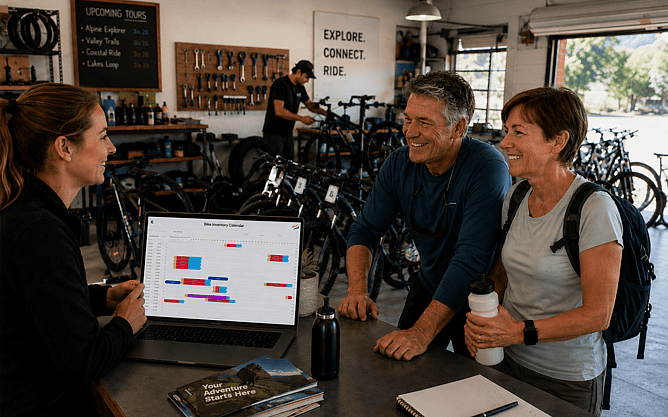
Ready to see how Odyssey handles inventory alongside bookings, departures, and communications in a real cycling operation? Get in touch and we'll walk you through it. https://www.myodyssey.app/book-a-demo/
About the Author
Al Check is Co-Founder of Odyssey, the operating system for multi-day tour operators. He leads sales, marketing, business development, AI strategy, and channel partnerships, helping tourism businesses simplify operational complexity and build scalable, AI-ready systems.
With more than two decades of experience in adventure tourism, Al has worked across guiding, customer service, reservations, operations, and senior leadership. His hands-on experience includes helping establish a new depot operation for Cycle Journeys and contributing to the leadership of one of New Zealand’s largest self-guided cycling businesses.
Al regularly writes and speaks on tourism operations, business improvement and the role of AI in helping operators turn trusted data into practical business intelligence. He does this through industry communities, including the Adventure Travel Trade Association, Tourpreneur, and Cycle Summit.