
Here at Odyssey we’ve spent years talking to tour operators about their operations technology. And one thing comes up again and again is their data is scattered across the business, and sometimes it's not even written down. That might have worked well enough until now, but the reality is AI is changing that.
How well you've organised your multi-day tour data is what will decide whether AI actually helps you, or whether you stay stuck doing everything manually.

How do I organise my multi-day tour operation data for AI tools?
The first step is turning your information like your itineraries, customer details, supplier information, gear availability and pricing into records that live in one connected place, not scattered across documents. That means mapping out your operational rules, your live inventory, and every point where a customer touches your business, so a system can actually read and use that information.
In practice, that means moving away from scattered spreadsheets, PDF itineraries, and email threads that only make sense to the person who wrote them. AI can only work with what it can see. If your data is inconsistent, incomplete, or out of date, AI will get things wrong like incorrect pricing, booking mix-ups, or inaccurate itineraries. Garbage in, garbage out, as the saying goes.
Multi-day adventure trips have a lot of moving parts such as gear and transfer logistics, permit deadlines, dietary needs and fitness levels,and supplier availability that changes by season. If your data isn't clean and connected, AI simply can't make sense of how those pieces fit together.
Michael Duffy, VP of product and innovation at Grasp Technologies, put it well: a lot of businesses think they're AI-ready just because they have a dashboard. In reality, travel data usually lives in silos, scattered across booking systems, back-office platforms, expense tools and payment systems. As he says, "The biggest challenge in travel AI isn't model sophistication. It's data fragmentation."
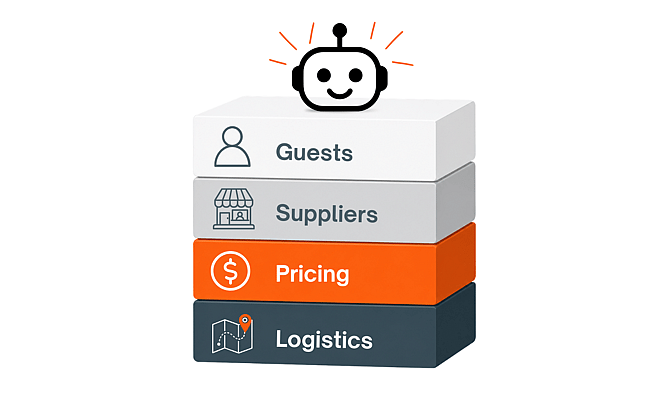
Don't buy an assortment of AI tools to fix broken spreadsheets
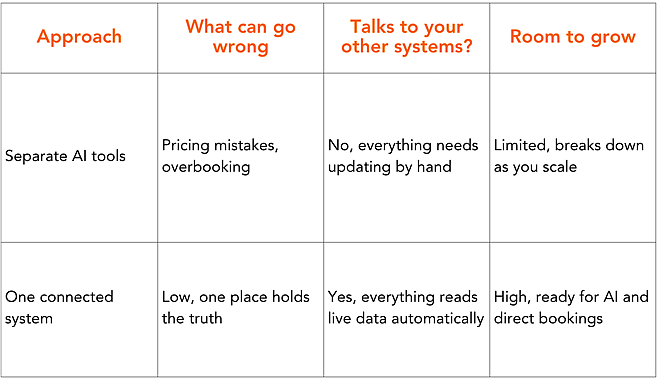
Swapping your core systems for a pile of separate AI tools doesn't solve the problem, it just gives you more disconnected pieces to manage. A different AI tool for every job creates the same fragmented mess tour operators have been dealing with for years, just with fancier software.
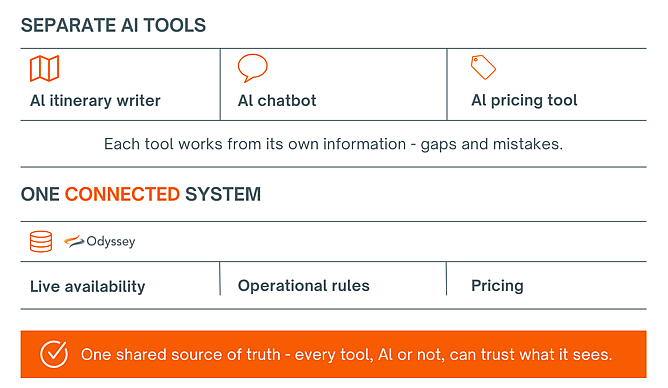
Add an AI chatbot, an automated itinerary writer, and a separate pricing tool on top of disconnected spreadsheets, and you've just isolated your information further. When a supplier changes departure capacity or pricing, that update needs to flow through to every customer touchpoint automatically. Tools that can't talk to each other, or to your booking system, mean someone on your team is stuck typing the same update in five different places.
Instead of buying separate apps for every problem, focus on bringing your core business information into one place. When everything's connected, any tool you add later, AI or otherwise, can pull live, accurate information safely.
How does clean data actually drive direct bookings?
Clean, structured data also sets you up for where making a booking is heading. AI-powered search tools and booking platforms need to be able to check your live availability, pricing, and itinerary details directly, and they can only do that if your information is set up in a way they can read.
More travellers are finding trips through AI search tools and conversational discovery now, not just search engines and OTAs. Those platforms need direct access to details like room set-ups, fitness levels, what's included, and transfer logistics.
That means turning static documents into live, structured information. Direct bookings have been under real pressure lately, with OTAs and other reseller channels picking up a growing share of sales. Getting your operational rules clearly defined means outside platforms, whether that's an OTA, an AI search tool, or a booking agent, can check your trip availability in real time instead of chasing you for updates.
If you want to understand how AI is changing the way guests find and book trips, have a read of our article, From Enquiry to Commitment: How AI Is Changing Customer Decision Journeys.
How should I clean up my tour data before touching AI?
Before you spend a bunch of money on AI, turn what makes your trips special into records you can actually use.
As Robbie Jameson, CEO of data quality platform Tale of Data notes “We've definitely seen a shift this last year in the data quality market. Now companies have tried to scale up their AI proofs of concept, they've been hitting the inevitable brick walls you hit with poor quality data. Garbage in, garbage out: nothing new here, but people need to experience it for themselves to really get a feel for the cost”
To give yourself a solid, scalable foundation, here's how to clean up your operations in practice:
Round up everything you've got: PDF itineraries, pricing spreadsheets, permit paperwork, and supplier contacts, all in one place.
Get consistent: turn free-text descriptions into set categories, like difficulty rating, daily elevation, vehicle needs, and meal exclusions.
Write down your rules: deposit deadlines, single supplement rates, minimum group sizes, so they're applied the same way every time, not just when someone remembers.
Pick one home for your data: move your clean records into a single system. When a supplier changes their pricing or availability, it should update in one place and flow everywhere else automatically.
Protect what makes you, you: keep your margins and supplier contacts private, and never paste that kind of information into a public AI tool.
Where might my tour data be hiding?
Round up your "invisible data." Pull every PDF itinerary, spreadsheet, customer email, and WhatsApp group note into one main folder, with organised sub-folders. If a guide carries vital trip rules only in their head, write them down.
Here are some places data tends to hide:
Email archives and shared inboxes: custom quotes, supplier updates, and customer requirements buried in staff inboxes as plain text.
Spreadsheets: every active workbook used to calculate margins, track departures, manage guide rosters, driver schedules, or routes.
Itinerary design software: descriptions, routes, and activity details sitting inside a standalone itinerary builder.
Supplier confirmations and vouchers: booking codes and service guarantees issued directly by hotels, restaurants, transport providers, and activity operators.
Older booking systems: historic passenger records, deposit schedules, and supplier contacts sitting in legacy back-office software.
Guide and field staff logs: daily logs, WhatsApp or Slack channels, or mobile apps where guides note route updates, delays, or incidents.
Policy documents: liability waivers, refund policies, and disaster recovery plans sitting on local or shared drives.
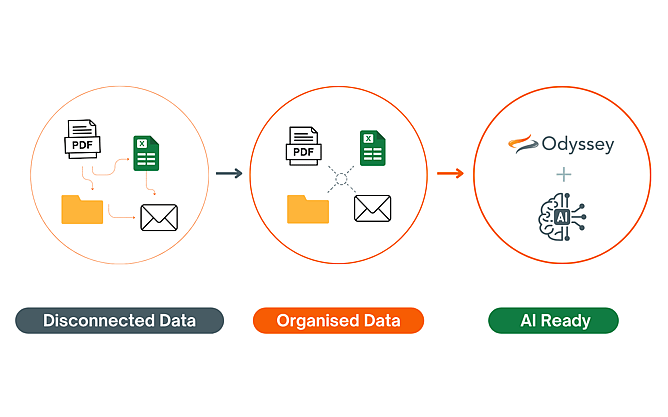
Odyssey can help you structure your Multi-day Tour data
We understand that getting your data ready for AI while still running daily tours is a big ask on top of an already full plate. That's exactly why it's worth partnering with someone who does this regularly. Structuring multi-day tour data is what we do at Odyssey, and we've helped plenty of operators make that move, starting with figuring out where all your data actually lives.
We've also built a new tool to make that first step easier, a simple drag and drop online process that then pulls it straight into Odyssey.
If that sounds useful, email me at info@myodyssey.app
Frequently Asked Questions
What does clean and structured tour data mean for a Multi-day Operator?
Why do generative AI tools give inaccurate answers about my itineraries?
Do I need to replace my existing booking engine to get data ready for AI?
Looking to kick start AI with your team…
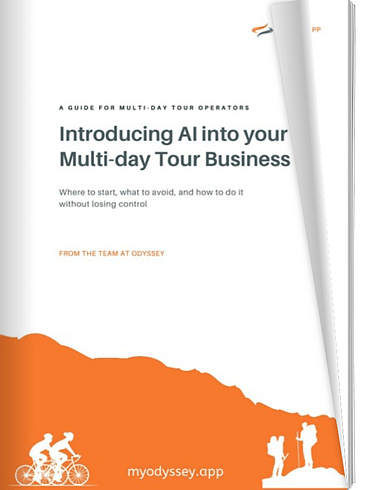
Download our White Paper: Introducing AI to your multi-day tour business: where to start, what to avoid, and how to do it without losing control.
This guide shows you the practical dos and don'ts of modern travel tech. You will learn how to evaluate AI risks, make some key data decisions and start building an AI strategy for your tour operation. It also includes a link to a simple Team AI Check-In to help you understand the current status of AI usage in your business.
About the Author
Al Check is Co-Founder of Odyssey, the operating system for multi-day tour operators. He leads sales, marketing, business development, AI strategy, and channel partnerships, helping tourism businesses simplify operational complexity and build scalable, AI-ready systems.
With more than two decades of experience in adventure tourism, Al has worked across guiding, customer service, reservations, operations, and senior leadership. His hands-on experience includes helping establish a new depot operation for Cycle Journeys and contributing to the leadership of one of New Zealand’s largest self-guided cycling businesses.
Al regularly writes and speaks on tourism operations, business improvement and the role of AI in helping operators turn trusted data into practical business intelligence. He does this through industry communities, including the Adventure Travel Trade Association, Tourpreneur, and Cycle Summit.